Following the completion of my PhD in 2015 in the Department of Philosophy at the University of Sydney, from 2016-19 I took up a Junior Research Fellow in the Department of Classics and Ancient History at Durham University. Since 2020 I have been employed as a lecturer in the School of Liberal Arts at the University of Wollongong.
My research expertise is in ancient philosophy, and especially Plato. My research focuses primarily on the intersections between Greek philosophy, poetry, and religion, and I have published extensively in these areas in world-leading journals and presses. See my CV for full details on publications.
My current major research project is a monograph which constitutes the first sustained and detailed examination of immortality in Plato’s Symposium. Against the standard interpretation that understands immortality as an intellective achievement, my central thesis is that Plato offers a distinct and ethically rich account of humans attaining immortality through participation in intergenerational traditions of ethical practice. Drawing on innovations in Greek conceptions of immortality, Platonic moral psychology, ancient conceptions of selfhood, ethical exemplarism, conceptions of beauty, and theories of honour, at stake is a vision of philosophical development rarely recognised in the dialogues. On this account, immortality is not achieved through withdrawal from embodies life, but through practices of love, creativity, remembrance, and recognition, which bind individuals into enduring communities of value. I am currently preparing a proposal for submission to Cambridge University Press, and intend to complete the entire manuscript by the end of 2026.
As a researcher, I am committed to principles of collaborative research and interdisciplinarity. This is evident in two major research projects which have recently been brought to successful completion.
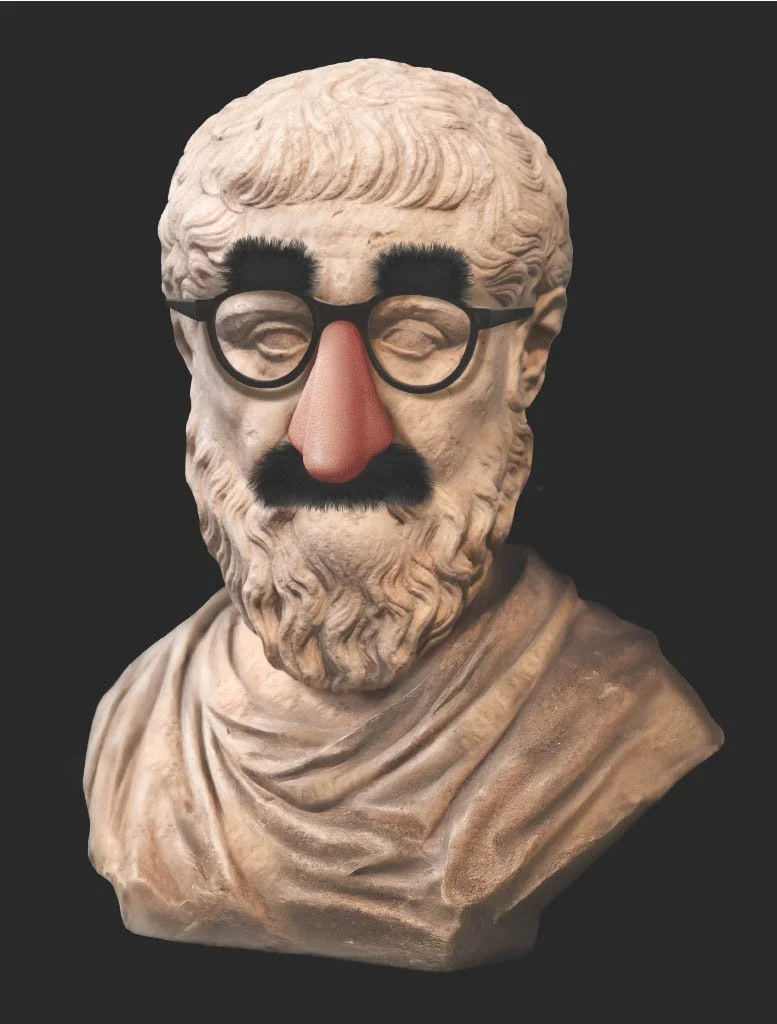
While the full cover is still in production, I include here for your delictation that cover image … which was basically the whole reason I got into the project.
The first is the edited volume, Plato and Comedy in the Socratic Dialogues, published through Cambridge University Press, co-edited with Prof. Andrea Capra and Assoc. Prof. Sarah Miles, and forthcoming in 2026. The volume constitutes the first systematic investigation of Plato’s engagement with Greek comedy, with a focus on the Socratic Dialogues, bringing together leading world-leading scholars from both philosophy and classics. The thesis of the volume is that comedy is not peripheral to Plato’s work, but integral to his human method, such that that those who seek to understand Plato’s philosophy must be ever attentive for comedic connections. By attending to humour, irony, and dramatic framing, among many other matters, the volume opens new perspectives on how Plato invites readers to reflect on self-knowledge, ethical seriousness, and the limits of intellectual pretension. Contributors to the volume include Prof. Kathryn Morgan, Prof. Richard Hunter, Prof. Franco Trivigno, and Prof. Edith Hall, among others. My own contribution is entitled ‘The Comic Worldview: Plato’s Symposium 189c ff.’. Employing Stephen Halliwell’s insight that Plato often approaches genres of Greek poetry as articulations of a coherent vision of the world, I reconstruct Plato’s conception of the comic worldview by examining Aristophanes’ speech on erôs in the Symposium
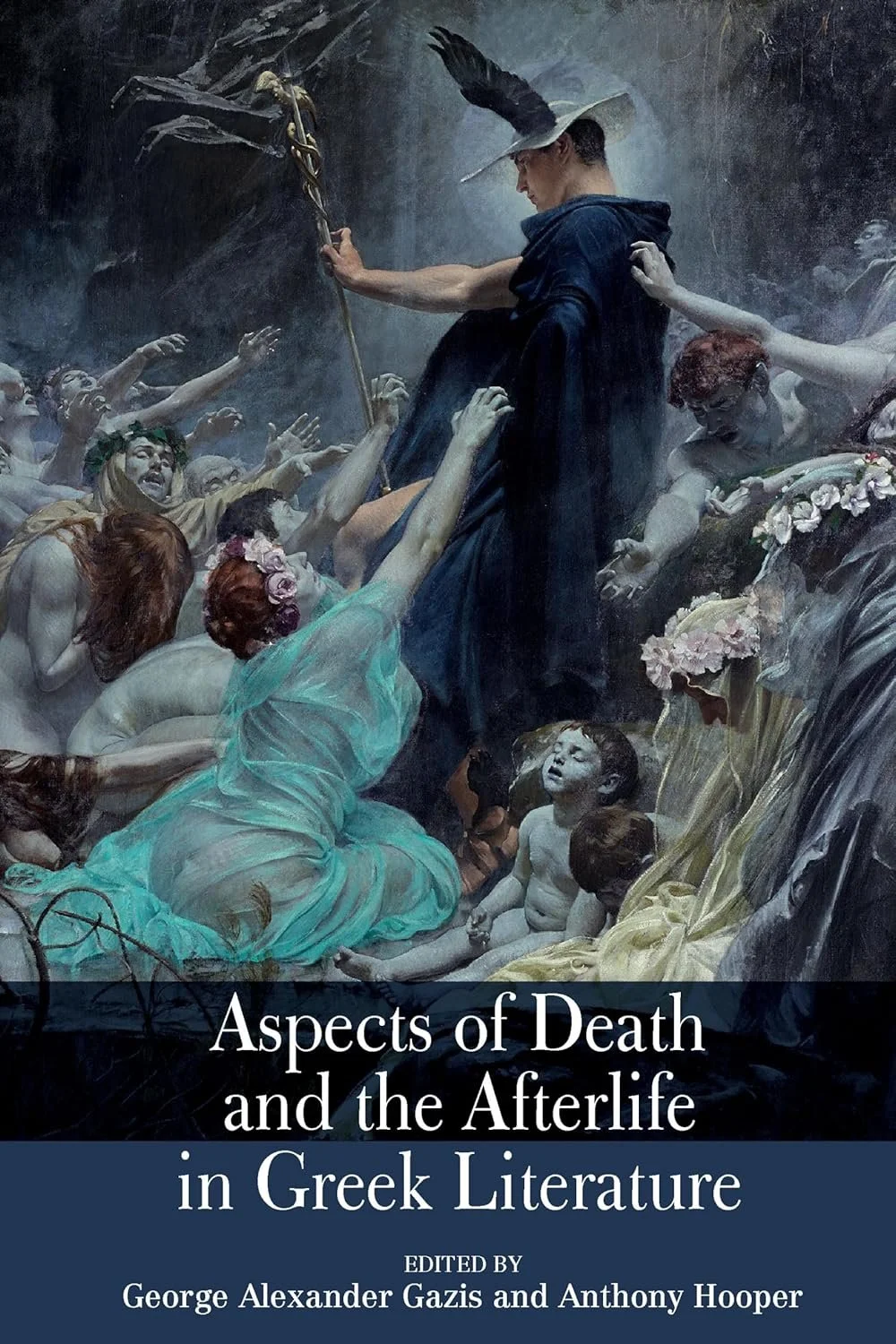
The second is the volume, Aspects of Death and the Afterlife in Ancient Greek Literature, co-edited with Assoc. Prof. George Gazis (2021). The volume draws together scholars working in the fields of classics, ancient philosophy, ancient religion, and ancient medicine to examine the influences, intersections, and developments in conceptions of death and the afterlife among poets, philosophers, theologians, and scientists in the Greek world. The central thesis of the volume is that Greek thinking on death and the afterlife was neither uniform, simple, nor static, and by offering an examination of these matters in a properly interdisciplinary context, the volume aims to demonstrate the full richness, complexity, and flexibility of Greek thinking concerning eschatological matters. Contributions to the volume include Prof. Radcliffe Edmonds III, Prof. Rick Benitez, Prof. Ioannis Ziogas, Prof. Alberto Bernarbé, and Prof. Alex Long, among others. My own chapter, ‘Renovating the House of Hades: Cult Extensions and Socratic Reconstructions’, utilises the metaphor of extension-building to conceive of the different ways important religious and philosopher thinkers appropriated and adapted poetic vision of the Underworld. I argue that Homeric visions of the House of hades represented an attractive and flexible vision of the Underworld, on which later thinkers drew in order to conceptualise and communicate their novel thinking concerning post-mortem fate. I contrast the ‘extension-building’ project of Eleusinian eschatological thought with the more dramatic renovations of the House of Hades undertaken in Plato’s dialogues, focusing on the Myth of Er of the Republic.
Two future major research projects will be pursued as part of the proposed Critical Antiquities Network Book Series with Edinburgh University Press. The first, Plato’s Critical Antiquities, examines how Plato engages critically with his ancient past in order to inform contemporary ethical, politics, and religious debates. The second, Ancient Poetic Worldviews, is a pedagogically oriented monograph, developed from my teaching at the University of Wollongong. Designed as a resource for undergraduate students, the book attempts to bring great texts of Greek epic, lyric, tragedy, and comedy into conversation with philosophy through approaching these texts as expressions of worldviews; as works which constitute wide-ranging, broadly coherent, organically related visions of the world.